As enterprise AI adoption deepens, the architecture of the data pipeline is becoming one of the most important determinants of whether AI initiatives can scale responsibly. For years, many organizations built data pipelines primarily to support reporting, analytics, warehousing, and business intelligence. The central questions were about ingestion speed, integration breadth, query performance, and storage efficiency. Those concerns still matter, but the emergence of generative AI, retrieval systems, intelligent agents, and multimodal workflows has fundamentally changed the role of the pipeline. It is no longer enough for data to move efficiently. It must move safely.
A privacy-preserving data pipeline is not a narrow technical add-on. It is not a single masking module placed on top of an otherwise unchanged architecture. It is a broader design principle that recognizes a central reality of enterprise AI: data value and data risk now travel together. The same information that makes AI useful may also be the information that creates the greatest exposure. Customer records, operational incidents, internal documents, product designs, supplier communications, support transcripts, healthcare forms, and financial materials are all potentially valuable inputs for AI systems. They are also precisely the kinds of inputs that cannot be handled casually.
For that reason, privacy-preserving pipelines begin with a basic but often overlooked principle: minimization. The most secure data is the data that never had to be moved, copied, or exposed in the first place. Yet in many enterprise environments, pipelines are built around convenience rather than necessity. Whole datasets are extracted when only a subset is needed. Raw fields are retained when transformed representations would suffice. Identifiers persist across stages where they no longer serve a purpose. A privacy-preserving architecture pushes in the opposite direction. It asks what is truly required for the specific downstream task and intentionally limits the rest.
This principle becomes increasingly important as AI use cases expand. Traditional analytics might require aggregated metrics or structured tables. Generative AI systems may ingest documents, tickets, notes, contracts, chats, or knowledge bases. Agents may traverse multiple tools and access information across departments. With every new use case, the temptation grows to build broader and more permissive pipelines. But permissive design accumulates invisible risk. Once data flows are too broad, privacy control becomes reactive rather than structural. A disciplined pipeline prevents this by keeping exposure proportionate to purpose.
The second major principle is transformation. Sensitive data does not need to remain in raw form throughout the entire pipeline lifecycle. In many cases, it can and should be transformed before entering analytics or AI layers. This transformation can take several forms depending on the objective. It may involve masking direct identifiers, tokenizing sensitive values, aggregating records to reduce granularity, redacting confidential text segments, abstracting business-specific references, or constructing synthetic variants that preserve task logic without exposing original content. The point is not merely to hide information visually. The point is to reduce downstream risk while preserving enough utility for the intended use.
This balance between utility and privacy is the real engineering challenge. A privacy-preserving pipeline that destroys all usefulness is not effective. But a pipeline that preserves complete operational richness while exposing unnecessary detail is equally flawed. Strong architecture therefore depends on understanding the intended downstream task. If the AI system needs statistical patterns, then record-level visibility may be excessive. If it needs classification structure, then raw identity attributes may be irrelevant. If early experimentation only needs workflow logic, then synthetic or partially reconstructed datasets may be enough. Good privacy architecture is not generic. It is aligned to use-case realities.
The third principle is access segmentation. Not every user, service, model, or environment should interact with the same version of the data. This sounds obvious, yet many enterprise systems still rely on overly broad access assumptions. Engineers, analysts, product managers, data scientists, security teams, and business users often work across connected environments, and without careful segmentation, data that was meant for one operational purpose can easily become available to many others. A privacy-preserving pipeline introduces layered access boundaries. Different roles see different forms of the same underlying information, based on necessity rather than convenience.
This segmentation matters even more in AI environments because modern AI workflows often blur traditional boundaries. A retrieval system may access documents from multiple business units. A model evaluation team may need sample outputs without source identifiers. An internal assistant may require policy content but not the entire historical conversation archive. A synthetic data generation workflow may need distributional characteristics without direct access to confidential fields. These are not edge cases. They are becoming normal operating patterns. The pipeline must therefore support differentiated access as a built-in feature, not as an afterthought.
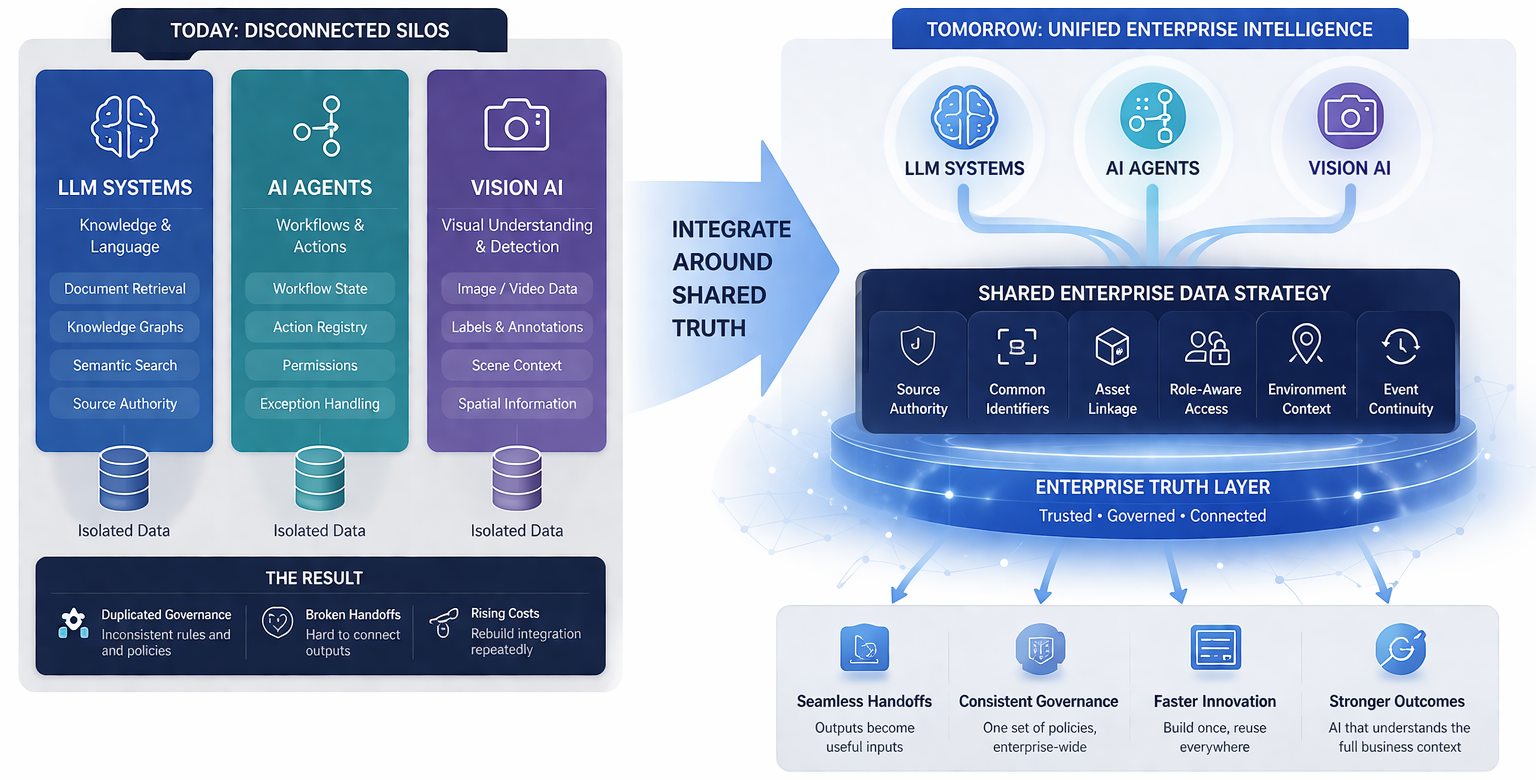
A fourth principle is traceability. In enterprise AI, privacy cannot be separated from accountability. Organizations increasingly need to know where data originated, when it entered the pipeline, what transformations were applied, who accessed it, which models or services interacted with it, and what outputs were produced. Without this visibility, it becomes extremely difficult to investigate errors, validate compliance, or explain system behavior to internal stakeholders. Traceability creates a chain of operational evidence that supports both governance and trust.
This is especially important in generative AI systems because outputs may be difficult to interpret after the fact. If a model produces problematic content, the organization must often determine whether the issue came from prompt structure, retrieval quality, source documents, model behavior, or data contamination. A traceable pipeline makes that diagnosis more possible. It also helps establish whether sensitive data entered places it should not have entered, whether transformation policies were respected, and whether downstream systems operated within approved boundaries.
The fifth principle is isolation. Privacy-preserving pipelines work best when raw data zones, transformed data zones, experimentation environments, evaluation spaces, and production-serving layers are not casually mixed together. When everything is connected to everything else, organizations lose the ability to control exposure with precision. Isolation does not mean fragmentation for its own sake. It means creating operational boundaries that reflect the different risk profiles of different stages. Raw ingestion environments should not behave like open development sandboxes. Experimental model testing should not automatically inherit full production visibility. Evaluation frameworks should not require unrestricted access to source systems. Separation is what makes selective trust possible.
Another important reality is that modern data pipelines must handle both structured and unstructured information. This is one reason privacy design has become more complex. Traditional systems were often centered on tables, fields, schemas, and explicit validation logic. But enterprise AI increasingly depends on documents, PDFs, meeting notes, chat histories, emails, incident reports, logs, multimedia assets, and other less structured forms of knowledge. Sensitive content can be buried inside these materials in ways that are harder to detect and harder to control. Privacy-preserving architecture therefore needs to account not only for rows and columns, but for language, context, and hidden references that move across systems more fluidly.
The strategic value of this kind of pipeline is substantial. Organizations with strong privacy-preserving architectures do not merely reduce risk. They become more adaptable. They can test new AI use cases faster because the rules of data handling are already embedded in the system. They can expand into new workflows without rebuilding governance from scratch each time. They can explain their practices more clearly to customers, regulators, and internal leadership. Most importantly, they can scale AI in a way that does not continuously increase organizational anxiety.
This is why privacy-preserving pipelines should not be viewed only as compliance infrastructure. They are innovation infrastructure. In the absence of disciplined architecture, every new AI initiative becomes a negotiation over risk. Teams spend time debating access, permissions, and data suitability instead of improving models, products, or workflows. But when privacy principles are embedded in the pipeline itself, governance becomes operational rather than obstructive. The system already knows how data should move, how it should be transformed, and where it is allowed to go.
In the long term, enterprises that succeed with AI will not necessarily be the ones with the most aggressive access to raw information. They will be the ones that know how to extract high-value intelligence while exposing the minimum necessary surface area. That requires minimization, transformation, segmentation, traceability, and isolation working together as a coherent architecture. Privacy-preserving data pipelines are not about slowing down AI adoption. They are about making it sustainable, explainable, and resilient enough to support serious enterprise use.
That is the core architecture of a privacy-preserving data pipeline. It is not one feature and not one tool. It is a systems-level approach to ensuring that as data becomes more useful for AI, it does not become proportionally more dangerous to handle. When organizations build privacy into the movement, transformation, and governance of data itself, they create the conditions for AI to scale with trust rather than against it.
