The enterprise AI conversation has expanded well beyond text. Organizations are increasingly deploying AI systems that process images, documents, audio, video, sensor data, and spatial information alongside or in combination with language. Multimodal AI capability has advanced rapidly, but the data infrastructure required to support it has not kept pace. The result is a growing misalignment between what multimodal models can do and what enterprise data environments can reliably provide.
Multimodal data alignment refers to the challenge of ensuring that data from different modalities — text, image, audio, sensor, spatial — is consistently structured, accurately labeled across modalities, temporally synchronized where relevant, and governed in ways that support multi-modal consumption by AI systems. In practice, most enterprises handle different data types through different systems with different standards, making alignment a persistent and difficult engineering problem.
This misalignment matters because multimodal models that receive inconsistently prepared or poorly aligned inputs produce inconsistent outputs. A model that combines document text with inspection images to assess equipment health will make poor assessments if the temporal relationship between documents and images is unclear, if image quality standards vary across sites, or if document terminology is inconsistent with image label schemas. The model capability is present; the data alignment is not.
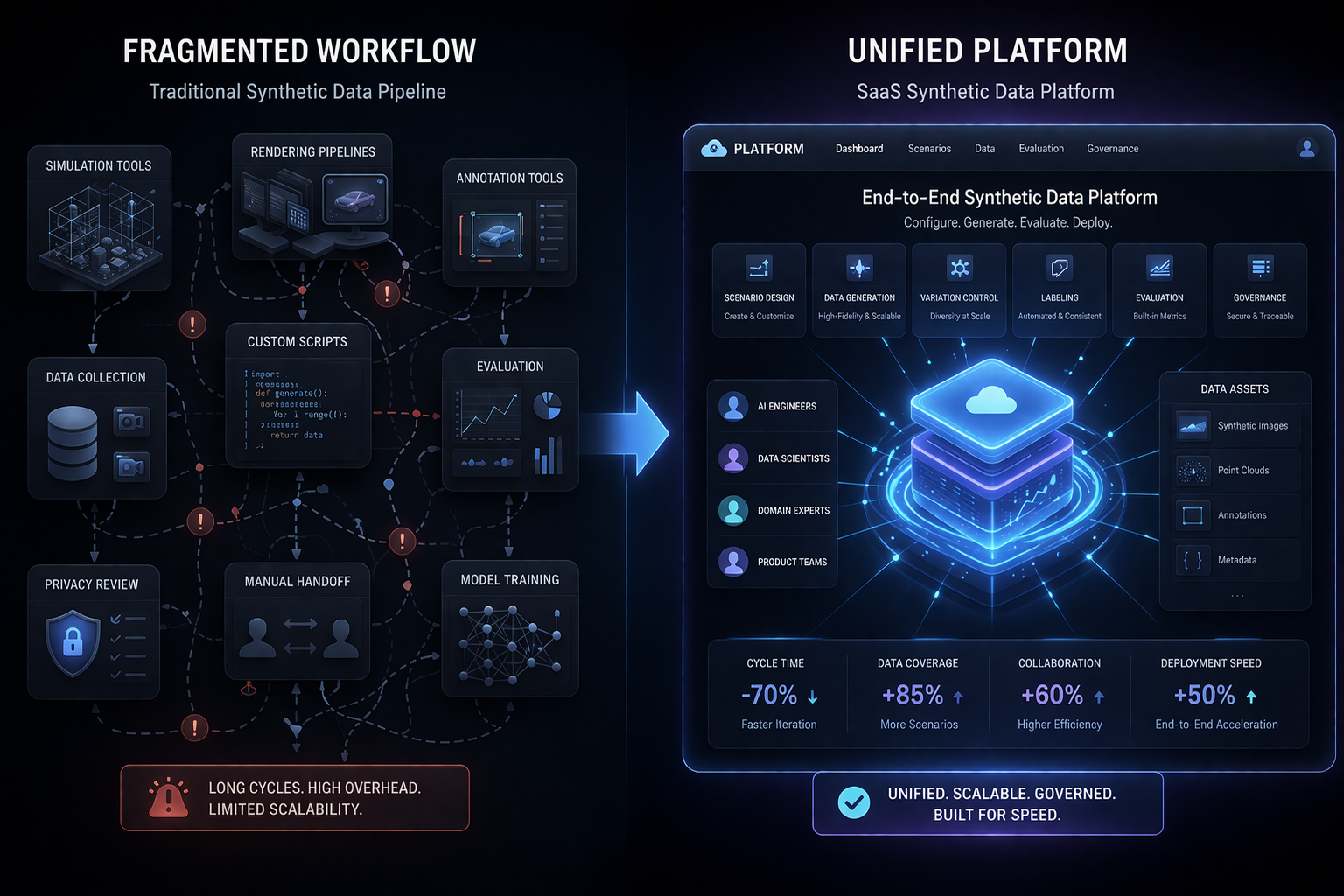
Building stronger multimodal data alignment systems requires addressing both technical and organizational dimensions. On the technical side, it means creating shared metadata standards across modalities, building pipelines that synchronize and cross-validate data from different sources, and implementing quality checks that evaluate alignment properties rather than per-modality quality in isolation. On the organizational side, it means establishing ownership and accountability for cross-modal data assets, which are often nobody's specific responsibility in current enterprise data governance structures.
The organizations that are advancing most quickly in multimodal AI deployment are typically those that have invested in a unified data infrastructure that treats all modalities as part of a single system rather than as parallel but separate streams. This unified approach requires more upfront design work, but it enables much more reliable multimodal AI behavior at deployment and makes subsequent expansion to new modalities significantly easier.
As multimodal AI becomes increasingly central to enterprise automation — particularly in industries where decisions combine physical observation with document context — the ability to maintain strong multimodal data alignment will become a core infrastructure competency. Enterprises that address this now are building a durable foundation. Those that treat it as a downstream problem will find multimodal AI capability persistently harder to realize than expected.