The narrative surrounding artificial intelligence has traditionally focused on speed, efficiency, and scale. However, as AI transitions from experimental laboratories to global enterprise deployments, a new, critical metric has emerged: sustainability. This shift brings Environmental, Social, and Governance (ESG) criteria to the forefront. Fundamentally, ESG provides a framework for building a sustainable future through responsible business practices—evaluating ecological impacts like climate change and emissions (Environment), assessing labor practices, diversity, and human rights (Social), and ensuring ethical leadership and risk mitigation (Governance). Today, this ESG mandate is no longer a peripheral corporate social responsibility initiative; it is a core operational requirement. Boardrooms and institutional investors are demanding clear answers regarding the ecological footprint of AI infrastructure.
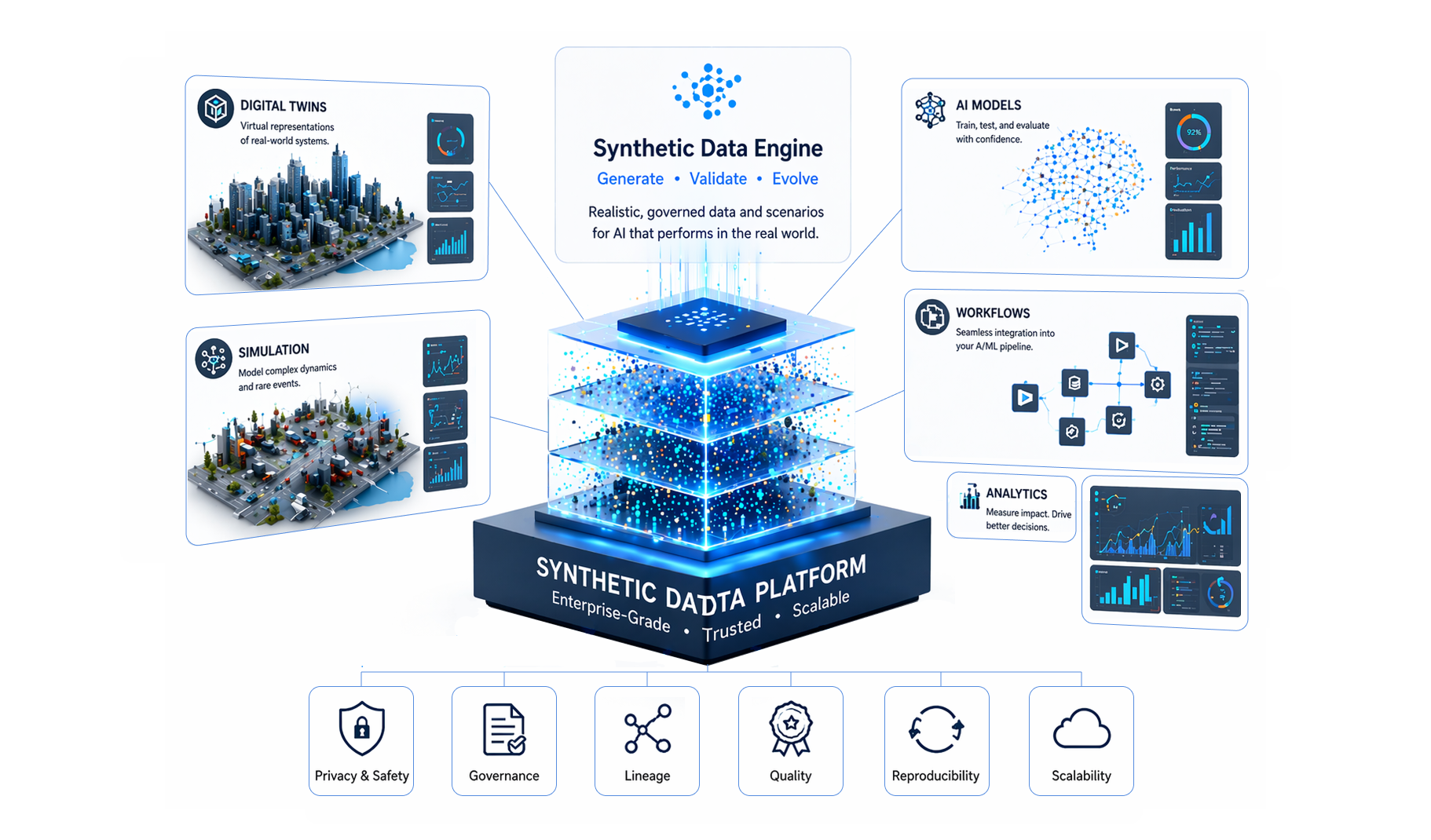
While much of the industry's attention has been fixated on the immense power consumption and carbon emissions generated by GPU clusters during the training of Large Language Models (LLMs), there is a massive, hidden environmental cost that is rarely discussed: the physical footprint of real-world data collection and hardware testing.
To understand the scale of the problem, we must look at how physical AI agents—such as autonomous vehicles, industrial robotics, and delivery drones—are traditionally trained and evaluated. Before an autonomous system can be trusted in the real world, it must be exposed to an exhaustive variety of scenarios, particularly edge cases such as extreme weather, unexpected obstacles, or hardware malfunctions. Historically, capturing this data required extensive physical testing. Companies have spent billions deploying fleets of vehicles and drones across the globe, driving millions of physical miles and flying thousands of hours simply to record sensor data. The environmental impact of this methodology is staggering.
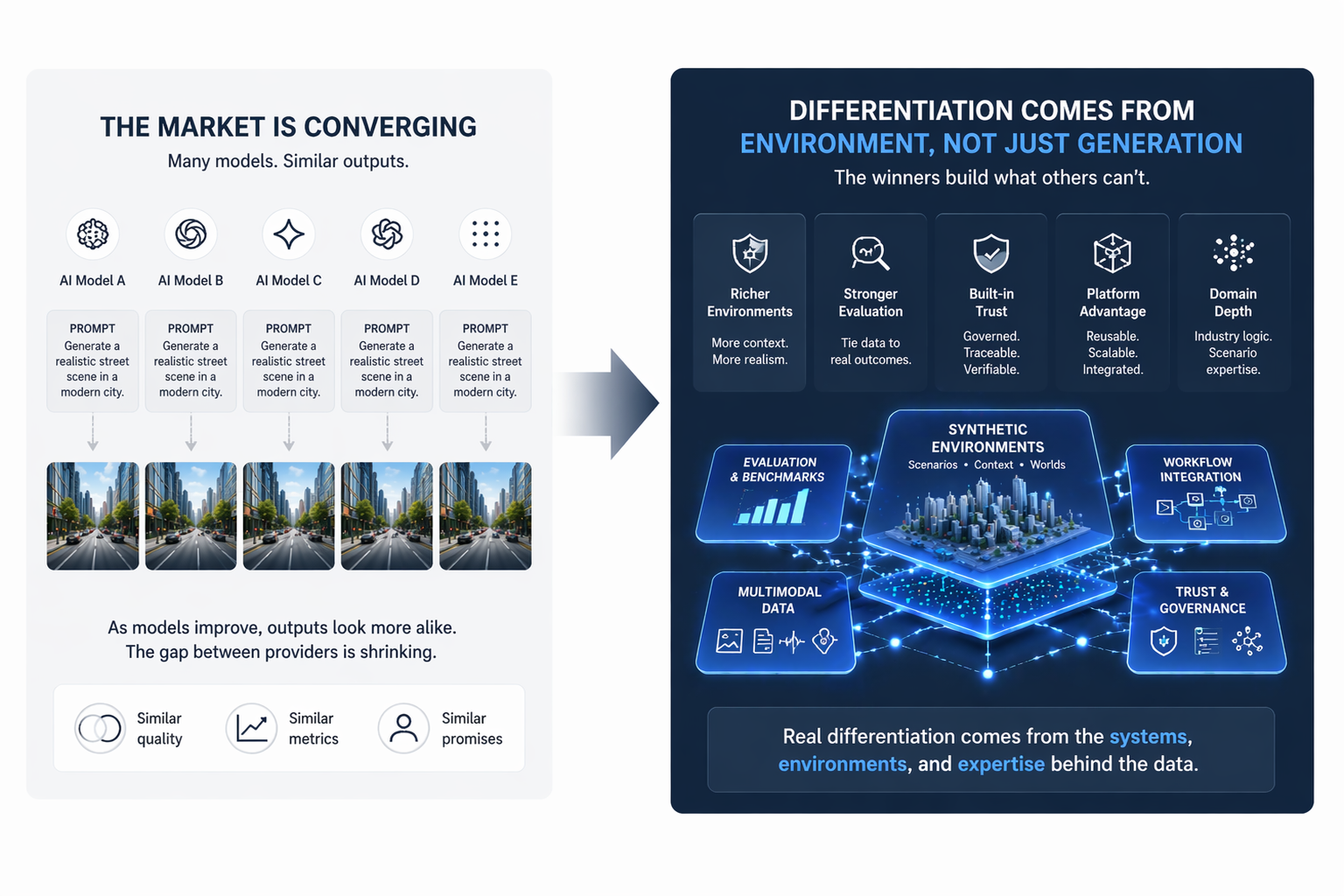
The sustainable solution lies in fundamentally decoupling data generation from the physical world. This is achieved through the creation of hyper-realistic Digital Twins and advanced virtual simulation environments. A digital twin is not merely a visual representation; it is a mathematically and physically accurate replica of a real-world environment. By heavily leveraging Geographic Information System (GIS) data, we can extract precise height maps, topographical details, and structural blueprints to generate vast, 1:1 scale 3D terrain models of urban landscapes, industrial facilities, and rural expanses.

