Industrial AI has always faced a challenge that distinguishes it from most other AI domains: the real-world environment it must understand is complex, dynamic, physically grounded, and often difficult or dangerous to instrument comprehensively. Machines break down in ways that are structurally unpredictable. Process conditions vary due to factors that sensors do not always capture cleanly. The space between nominal operation and early-stage failure is often narrow and difficult to define with purely observational data. This is why digital twin-based data is becoming essential. Not as a convenient supplement to real data, but as a fundamentally different way of generating the kind of operationally meaningful signal that industrial AI actually needs.
A digital twin is a dynamic virtual representation of a physical system that reflects its structure, behavior, material properties, operating parameters, and failure dynamics with enough fidelity to support useful simulation. In the context of data generation for AI, what matters is not just that the twin looks like the physical system but that it produces data distributions similar to what the real system would produce under the same conditions. This distinction matters because many early digital twin implementations were built primarily for monitoring or visualization rather than for data generation. Using them effectively as AI training environments requires additional engineering investment, but the payoff is access to scenarios that are genuinely difficult to acquire through traditional data collection alone.
through traditional data collection alone, several specific problems arise repeatedly in industrial AI. The first is failure rarity. Industrial equipment is designed to operate reliably for long periods, which means genuine failure events are structurally uncommon in any given data collection window. AI models trained primarily on healthy operation data may never learn to recognize the subtle precursors of failure because those precursors simply do not appear often enough in real records. Digital twins can address this by simulating degraded states, partial faults, and abnormal operating conditions at scale, providing the model with exposure to failure signatures that would take years to accumulate in real operations.
The second problem is condition variability. Industrial systems rarely operate in perfectly stable environments. Temperature, vibration, load, material input quality, maintenance history, and environmental factors all introduce variation that affects sensor readings and system behavior. When data is collected only under normal or idealized conditions, the model learns a distribution that is narrower than the one it will encounter during deployment. Digital twins enable structured variation of these parameters, creating training data that covers the operational envelope more completely. This reduces the risk of models that perform well in controlled evaluation but fail under real-world variability.
The third problem is label quality. In real industrial environments, ground truth labeling is often ambiguous, delayed, or absent. A sensor anomaly may not be definitively linked to a root cause until a maintenance team physically inspects the equipment days later. A visual defect in a production image may have multiple possible causes that are not distinguished in the metadata. Digital twins provide a controlled environment where causality is known by construction. The simulation generates the data and simultaneously defines what the correct interpretation of that data should be, creating labeled datasets that are structurally cleaner than what observational collection typically produces.
contextualized data is the deeper value proposition of digital twins. Industrial AI rarely benefits from data that captures isolated sensor readings or individual image frames without context. What matters is how the system is operating as a whole: what process phase it is in, what inputs it received recently, how the environment has changed, and what maintenance history precedes the current state. Digital twin environments can embed this context into every generated example, producing data that reflects the relational structure of industrial operations rather than just isolated snapshots.
This contextual richness becomes particularly important when building predictive models. Predictive maintenance, production quality forecasting, energy optimization, and anomaly detection all benefit from data that contains meaningful temporal and operational context. A digital twin that models not just the equipment but the surrounding process creates training data that teaches the model to reason about relationships rather than just classify individual readings. That kind of reasoning capability is much harder to develop when training data comes only from passive observational collection.
There is also a data governance advantage. Industrial data often contains proprietary process information, commercially sensitive operational details, or records that are subject to regulatory constraints. Sharing or externalizing such data, even for AI development purposes, can create compliance and competitive risks. Digital twin-based generation allows organizations to build rich training datasets without exposing the underlying real-world records. The synthetic data can capture statistical patterns and structural dynamics without containing the raw operational data that needs to be protected. This makes it easier to build AI capabilities while maintaining appropriate data boundaries.
The practical challenge in building digital twins for AI data generation is calibration. A twin that is not well calibrated to the real system will produce data that does not transfer well to real deployment. This means investment in model fidelity, parameter estimation, and ongoing validation against real sensor signals is necessary. Organizations that treat digital twin development as a one-time setup and expect static calibration to hold over years of changing operational conditions will likely find that their synthetic data gradually diverges from reality. The twin needs to evolve alongside the physical system to remain a useful data source.
stronger ways to differentiate industrial AI capabilities will increasingly depend on proprietary data assets that reflect specific operational environments. General-purpose public datasets do not capture the signatures of a specific manufacturing line, a particular type of equipment, or a unique process environment. Digital twin-based generation is one of the most promising paths toward creating those proprietary assets without requiring unrealistic amounts of real-world data collection, labeling time, or exposure of sensitive operational records. For organizations that take industrial AI seriously as a long-term capability, building digital twin infrastructure is not optional. It is increasingly the foundation on which sustainable data strategy depends.
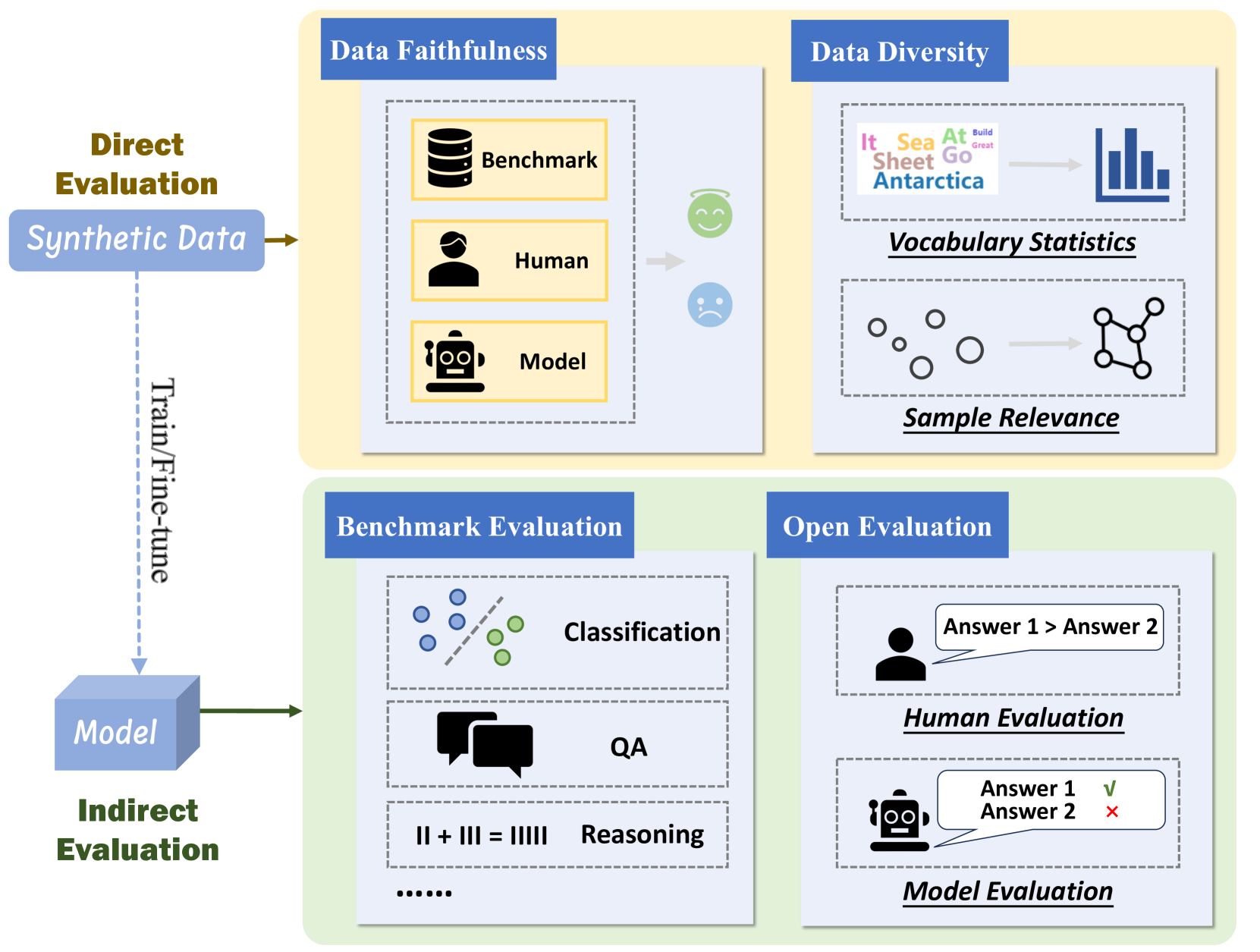
The transition toward digital twin-based data generation is not instantaneous, and it requires engineering investment that not every organization is positioned to make immediately. But as industrial AI moves from pilot experiments toward operational deployment at scale, the gap between organizations that have invested in this infrastructure and those that have not will become more visible. The data generated from well-calibrated digital twins gives AI models access to a kind of experience that cannot easily be replicated through passive observation. That is ultimately why this approach is becoming not just useful but essential for industrial AI that needs to perform reliably in real-world environments.
